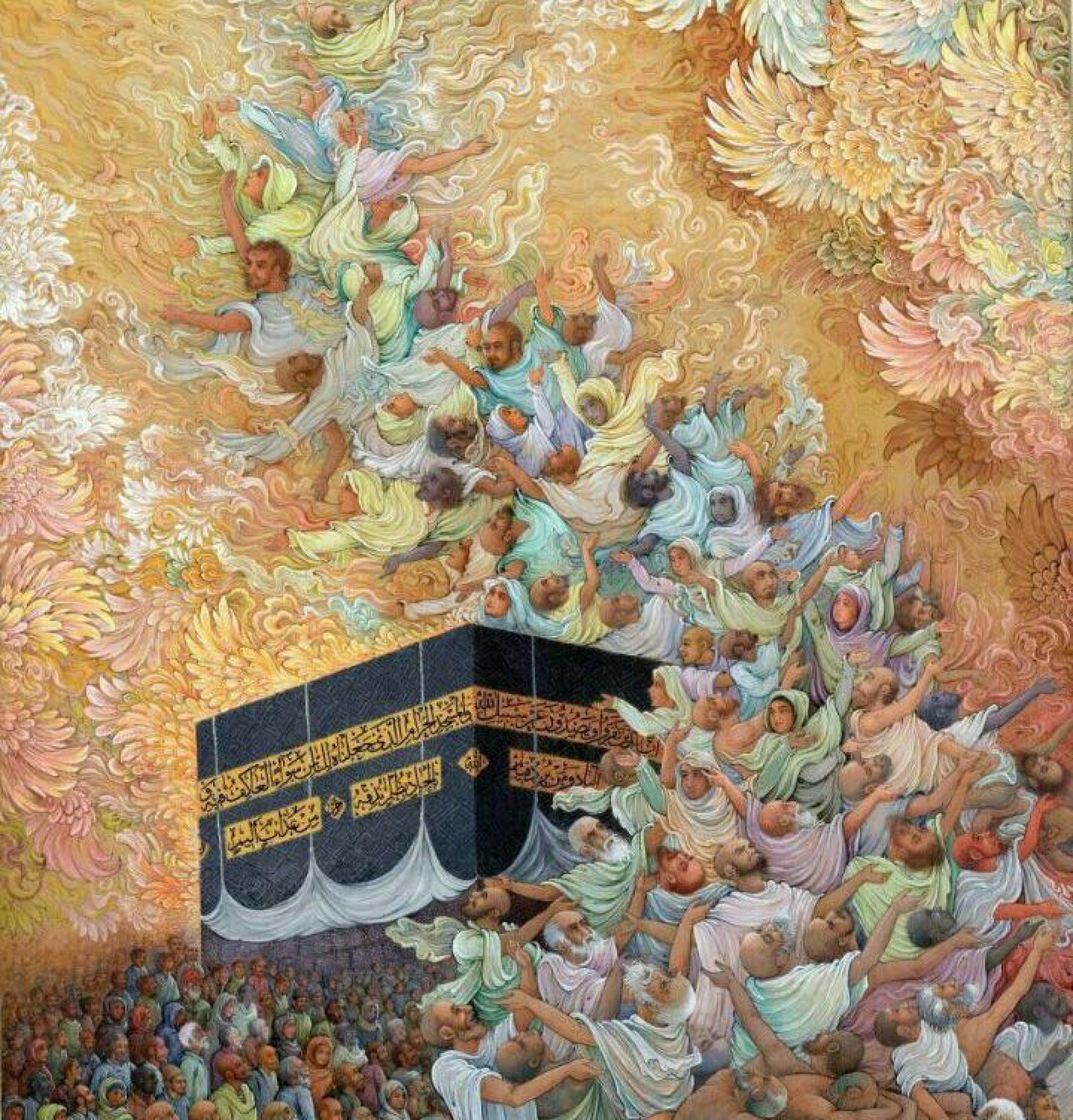
The Interpretation and Importance of two surahs of the Qur’an (mu’awathatain): Struggling against magic, evil energy and evil eyes!

In the case of encountering any evil, it is highly recommended to recite chapters Al-Falaq and An-Nass. It is narrated that the Prophet (sawas) sought refuge in the Creator of mankind with these two chapters to protect Imam Hassan and Imam Hussain (as).

One is inclined to ask the following:

1- How can anyone seek refuge in anything to dispel negative energy, evil, the acrimonious, the vicious, and the jealous individuals?

2- How can God be All-Merciful and these two chapters of His Quran be not?

3- How can one seek refuge in Him without tools, neglecting His effective and powerful Words, i.e. these two surahs of the Qur’an?

4- Is there anything spiritually more effective and powerful than the Qur’an?

To start answering the last question, one may say that Muslims believe that the Qur’an is –spiritually- the most powerful text. To answer the third question, it is clear that one should seek refuge in Him, albeit with tools that He has prescribed for it. One of those recommended tools is the Qur’an. It states in one of its verses, the following:

‘And We send down of the Qur’an that which is healing and mercy for the believers, but it does not increase the wrongdoers except in loss.’ Holy Qur’an, C. 17: V. 82

With regards to the second and the first questions, one believes that the whole Qur’an is the perfect manifestation of the divine Mercy. However some of its verses can be referring to being hard and tough against the oppressors and dictators. These two chapters are perfect examples as how to seek refuge in Him. These two holy surahs contain profound meanings and excellent spiritual guidelines that must be taken into consideration when carefully reading them, as much as the Qur’anic verses have emphasized them. From one angle, one should remember that seeking refuge in the Almighty should be accompanied by good deeds and excellent moral behaviors. One cannot invoke the Lord saying, “O God, I seek refuge in you, but contrary to Your commandment, I’d love to indulge myself in backbiting and gossip,” or by saying, “Contrary to Your command, I get extremely irate and angry enough to kill someone or to cheat and lie.” How can one stand up to pray to His Lord while ignoring His mystical presence and hardly remembering Him? As such one understands that seeking refuge in Him, necessitates that one must adhere to His commands, in order to be protected.

Al-Mizan Commentary on Surahs al-Falaq and an-Nass

Surat al-Falaq:

قُلْ أَعُوذُ بِرَبِّ الْفَلَقِ (1 ( Say[O, Messenger!]:” I seek refuge in the Creator of the Dawn! )

I seek refuge in the Lord, who has the power to break the day from the night, so He can ward off evil, too.

مِنْ شَرِّ ما خَلَقَ (2 (“From the evil of all creatures)

وَ مِنْ شَرِّ غاسِقٍ إِذا وَقَبَ (3 (“And from the evil of the darkness of the night when it overtakes all things;)

Here, three evils are specifically mentioned. The reason is clear: these are the three evils that work secretly, and the human being is unaware of how to keep him/herself away from it. The first evil is the night (O, God I seek refuge in You from the evil of the darkness of the night!). That is because most acrimonious acts usually occur under the darkness of the night.

وَ مِنْ شَرِّ النَّفَّاثاتِ فِي الْعُقَدِ (4 (“And from the evil of the sorceresses, who blow spells in the knots;)

Here, one seeks refuge in the Lord from the second evil, which is that of the sorceresses. The phrase means both female and male sorceresses, but it is expressed in the feminine form, because this was more common among women during the time of the revelation.

وَ مِنْ شَرِّ حاسِدٍ إِذا حَسَدَ (5 (“And from the evil of the jealous when jealousy is overwhelming.”)

The third evil is the jealous individual. The Quran states: “I seek refuge in the Lord, from the jealousy and its destructive and insidious effects.”

Surat An-Nass

قُلْ أَعُوذُ بِرَبِّ النَّاسِ (1 مَلِكِ النَّاسِ (2  إِلهِ النَّاسِ (3 (Say [O, Messenger]: “I seek refuge in the Creator of mankind,” the King of mankind, the God of mankind,”

I seek refuge in the Lord! Here the verses speak about three divine attributes, which are mainly related to the Almighty Lord. 1) So, I seek refuge in the God, who is the tutor! Here, the attribute of tutor means the manager and mentor, the very kind God who wants to train and increase human beings’ awareness and spiritual development. 2) The second attribute is God, who possesses omnipotent power and overwhelming authority, and has a decisive ruling, so that whoever can escape from any evil he can by using his power and monarchy, such as kings. 3) And the third, is that it is God who is the only genuine and absolute true God, where all, each, and every one surrenders to His authority and needs Him.

مِنْ شَرِّ الْوَسْواسِ الْخَنَّاسِ (4 “From the evil of the temptations of Satan:

Temptation is the trait of Satan. That is, to hide after having insinuated …. In a sense, some have said that Satan causes temptation and constantly seduces man into committing evil. As soon as man fails to remember God, or when one ignores the remembrance of God, one fails against temptation.

الَّذي يُوَسْوِسُ في‏ صُدُورِ النَّاسِ (5 “The one who whispers into the hearts of the people)

The heart is indeed the devil’s temptation place, because everyone’s decision making is somehow associated with the heart, which means, in this context, the mind!

مِنَ الْجِنَّةِ وَ النَّاسِ (6 “Whether he be from among the Jinns or among mankind.”

One should seek refuge from each and every evil, be it caused by [Jinns] evil entities or ghosts, and/or by people who have been changed -sadly- into devilish individuals, have become Satanic, or have the perfect manifestation of the devil.
 

Promoting Good and Prohibiting Evil

Imam Hussain (as) has said:

(من اَحبك نهاك و من اَبغضك اَغراك) (Bihar al Anwar, vol. 75, p. 128)

‘The one, who loves you, will tell you off to protect you from evils, while someone who despises you, will not prevent you, but rather  allow you to indulge in doing wrong things.’

Imam Hussain (as) was trained by Saydah Fatimah (as), daughter of the Prophet (sawas) and  Imam Ali (as). He was born into this Qur’anic family. He is trying to teach us about the real friends, and how to measure the genuine friendship. Also he wants us to realize that  those who don’t care about us, are only going to let us carry on the stupid behaviour. While those who do care, would try their best to help correcting and improving ourselves!

A person should put all his/her efforts into being a good and real friend (for his friends, wife and those around him, including his relatives) and try -as much as possible- to prevent them from developing bad and evil deeds, at least through not praising bad habits. Therefore, s/he should say to those around him/her with complete sincerity -though through smart ways- if s/he finds bad behavior in them, in order to correct them. However, if s/he is unable to rectify and correct the person, he should pray for him/er instead, asking the Almighty to help him/her.  Such correction, or praying for people will keep the actor away from backbiting, accusing others and spite and will strengthen his/her relationship with those around him. If s/he has been careless and negligent in this regard, for compensation, in addition to give alms and spending in the way of Allah, s/he should find one of his bad habits and try to remove it and, in this way, s/he would correct him;- herself. If the person is unable to correct another person’s evil or pray for him/her, s/he should sit and think about the cause. Is it because of his/her inner spite that s/he is unable to pray for the other person? Is it because of his/her lack of understanding Allah the Almighty and carelessness towards the trial from Allah? S/he should know that deliverance is only in being rectified. First s/he should correct and rectify him;- herself and then others. Those who are careless regarding correcting others, will remain estranged from real deliverance and salvation.

The positive effects of good relations with parents

Living with poor income and provision, lower economic level and humiliation and how they are caused by misbehavior with one’s parent!

There are many Hadiths, which are narrated from Imams (as) about being good and kind to parents and the positive results in life. The contrary, or the negative results of disobeying them are also highlighted. Imam Ali al-Hadi (as) in the book ‘Bihar al-Anwar’ [(published in Beirut), vol. 71, p. 84], has narrated:: العقوق يعقب القلة و يؤدي إلى الذلة. “Annoying the parents creates misery and humiliation”. The prophet Muhammad has said: مَنْ‏ أَحْزَنَ‏ وَالِدَيْهِ‏ فَقَدْ عَقَّهُمَا  “The one, who makes his parents deeply saddened, he has annoyed them” [Al-‘agh])

Annoying the parents -whether by word, behavior, or due to neglecting or displaying carelessness with them,- causes misery in life. And vice versa showing kindness to them causes various blessings -both material and spiritual-, extending income, and longevity.  (In fact, the meaning of parents is any parents; regardless of their literacy or illiteracy, and desirable or undesirable behaviors. From Imam Sadiq (as), is narrated: و بِرُّ الوالدين بَرَّينِ كانا او فاجِرَين! (اصول کافی: ج2: 162) . This means: do good to your parents whether they are loose-living or good-doers; unless they drive their child to associate anything with polytheism, i.e. accepting a rival to God, which he has no knowledge of, in which case, one must not obey them! Also, in this case there will be no bad or evil actions, rather just as Ibraham (as) kept away while maintaining respect for him. There are some children, who, due to the lack of emotional feeling, -perhaps as a result of failed parental responsibility and remaining dissatisfied with their own parents in the past, or other undesirable behaviors- do not want to interact with them, nor treat them kindly! However, the purpose of kindness to parents, is being obedient to the divine command; as the Qur’an refers to this: (his Mother bore him with hardship and delivered him with hardship (Ahqaf: 15)), that is, whatever includes all the mothers, so that if someone neglects them, it is a disobedience to God’s command. This is because in His verses of the Holy Qur’an, God has put a lot of importance and emphasis on people being kind to parents either through kind acts, or polite words! One should never become angry nor even look at them fully loaded with hatred. Whoever disregards the important commandments of God has been engaged with the devil’s temptations! These include evil thoughts caused by one’s ego, or the people around him/her encouraging him to be disrespectful with the parents! Some may be tempted to think that his needs, work, family life …etc. are more important than God’s commandments, and thus disregard the command of God. In any case, one who disregards God’s commands and puts other things in priority of God’s commands, whether work and income, wealth, child, couple, etc., should never expect his/her prayers to be accepted, nor his demands from the Almighty God to fulfilled. For the Lord has said: “… fulfil My agreement! I shall fulfil your covenant. (Baqareh: 40)”. So we must act: opening the doors of blessings on ourselves with kindness to prevent and engaging kinds of problems, loss of income and sustenance, defects and humiliation through annoying them.

O, Muslim! O, human being! Have only divine motivations!

What should be our motivations?

It has been narrated from Imam Baqir (as) in the book Tuhaful Uqul (Narration No.: 284) that he said to one of his students:

‘You will never be considered Shi’ah until you reach that level, that if all the people of the city say that you are a bad person; you will not be discouraged, and if they say that you are righteous, you wouldn’t be happy. But put yourself in front of the Qur’an! If you refrain from what is forbidden in it and wish for something that is encouraged in it, then be happy and satisfied that the words of people don’t matter. And if you are far from the Qur’an, the appreciated words of the people should not deceive you.’

One believes that this text should answer the following questions:

  1. How should one measure the acts?
  2. Should others’ approval or disapproval be the crucial point in shaping the believers’ mind?
  3. The process of decision making should one pay great and special attention to others’ approval?

The crucial messages of this Hadith are as follows: (A) that the believer should only be motivated by seeking the divine, i.e. The Lord’s approval; (B) that neither the appreciative words of people, nor their disapproval should be considered as the measure to either the correctness or the falsehood of actions. One should never be pleased by disingenuous flattery, nor be saddened by people’s wrong disapproval.

As such, if one wants to know whether he is a righteous person, he must put his actions in blunt comparison with the divine commandments and Qur’anic teachings. Therefore, after each recitation of the Qur’an and/or reading the traditions of the infallibles (as), it is recommended to make a firm decision to avoid any form of bad behavior. For example, if s/he reads the verse restraining anger, “and restrain [their anger] And forgive others; and verily, Allah likes the good-doers;” (Al-Imran: 134), then s/he should decide to control anger and remain patient. Whenever an individual attempts to harmonize his/her behaviors with the Qur’anic teachings and the traditions of the infallible Imams (as), then s/he may consider himself or herself righteous, even if others may consider him ‘a bad person’! But if it was difficult for him to follow the Qur’anic teachings; for example when he reads about the prohibition of backbiting “Do not backbite about one another” (Hujurat: 12), but s/he finds it hard to practice it and to refrain from this bad behavior, s/he should never be pleased with himself or herself, even if other people consider him righteous.

Based on that, if an individual finds it hard to refrain from bad behavior, while reading the Qur’an’s verses and other divine teachings, then s/he should question what is the cause of it? When one won’t adhere to the divine commands and is not willing to coordinate the act and behavior with the Divine instruction, it means there must be something wrong! Does s/he think that the behavior and actions, from the point of view of others indicates that s/he is a righteous person? Is s/he satisfied and thinks that there is no need to purify the heart? Does s/he really think that one does not have any bad behavior, such as intended lying, fraud in business, laziness in acts and superficial prayers? The very reluctance to learn, study, yet wasting time and speaking idle talks are all bad qualities. No one can be sure that s/he has no anger, impatience, stinginess, disrespect of parents, and/or neglecting others’ rights, but they are all negative qualities, and none of those acts are in accordance with the Qur’anic teachings.

One should never forget the Divine promises, namely that God blesses those who purify their hearts “the gardens of Eden through which rivers flow, to live in forever. That will be the reward for anyone who becomes purified.” (Taha: 76). Then, one takes them into consideration and acts accordingly! Whenever a person is not willing to purify the heart from bad intentions, s/he must know the Qur’anic warning: The love of passions [that come] from women and children has attracted mankind, as well as accumulated gold and silver treasures, pedigree horses, livestock and crops. That means enjoyment during the worldly life, while God holds the finest retreat. (Al- Imran: 14) Thus one should be precautious and return to the Lord with remorseful heart in order to act and be purified.


The Prohibition of fraud, deceiving and deception

According to the hadith of Imam Hussein, in the Book of Bihar al-Anwar (Beirut), c. 65: 156), which is narrated as follows:

إنَّ شِیعَتَنا مَن سَلمَت قُلُوبُهُم مٍن کلِّ غَشٍّ وَ غِلٍّ وَ دَغَلٍ

Translation: ‘Indeed our Shi’ahs are only those individuals, whose hearts are purified from any form of cheating, treachery, stealing and deception’

Based on this narration, if someone deals with fraud, deceives and deceive others, s/he will not be regarded as a true Shi’ah. The hadith has highlighted the importance of this issue in a very clear and explicit way. One must constantly remind him or herself that God is the supervisor of the actions! My advice to you: ‘be careful while facing any problems-even a moment- not to think about considering fraud, deceiving, or any type of deception! Leave your concerns to Him and consolidate the pure belief in His divine power. The reason should be obvious, as, if honesty were chosen, being truthful would result in that God surely solving those obstacles and problems.

However if someone -while facing a problem in life- immediately surrenders to select fraud, cheating, deception and/or other various types of treachery, he/she should think about the cause.  Was it because of weakened faith, or having limited trust in God? Or due to the poor idea that God’s treasures and funds are insufficient?! Perhaps the cause was being inspired by sick people in his/her environment? Is it to shackled faith or lacking profound theological knowledge? Indeed, if poverty, extreme needs, discrimination, or injustice etc.. lead one to surrender to deception, this indicates that one does not believe in the Omnipotent Powerful and Bountiful God! Or lacking the faith that God can solve any problem! Maybe it is caused by the wrong belief that disgusting wealth is worthier than God’s satisfaction! These are just examples as to why someone would deviate from the path of absolute servitude to Almighty God. But the right path is manifested and summarized in the following: With the occurrence of any problem or any greed, or lustful desire, one has to return to His/Her Lord, and surrender to the pure teachings of the Qur’an. Some of the divine verses that may intensify the belief in God’s treasures are as follows:

(أَنَّ اللَّهَ الَّذي خَلَقَ السَّماواتِ وَ الْأَرْضَ قادِرٌ عَلى‏ أَنْ يَخْلُقَ مِثْلَهُم‏))(اسراء: 99))

( Do they not consider that God, Who has created Heaven and Earth, is able to create the like of them? ) One has to reflect and remind oneself that God was able to create the heavens and the earth. When I worship such a Lord, He would certainly assist me. Taking those ideas into consideration should persuade the wayfarer to return to the path of honesty in order to receive God’s reward: (((لِيَجْزِيَ اللَّهُ الصَّادِقينَ‏ بِصِدْقِهِم‏…)) (احزاب: 24))(so God may reward the truthful for their truthfulness). On the contrary, any shortcoming on the path of truth, will result in the punishment of divine punishment, (((لِيَجْزِيَ اللَّهُ الصَّادِقِينَ بِصِدْقِهِمْ وَ يُعَذِّبَ الْمُنافِقِين‏)) (همان (so God may reward the truthful for their truthfulness and punish hypocrites). Therefore, one must remain careful, keep much in mind remembering God, strengthen belief in the omnipotent power of God, and if some urge from Satan prompts him/her, seek refuge with God. If for any reason, she/he has neglected these guidelines, he or she should immediately remember these constructive ideas and seek the help of individuals, who were considered by the Qur’an as “the learned of the people of the Book”! As such s/he should consult with them and seek their assistance considering any form of needed compensation.

Inspiring Theodicean Practice

Reading between the lines of Verse 40 of Chapter 17 of Qur’an, one is inspired:

  • The grass-root belief that boys are superior to or better than girls is none-sense and pure conjecture. ‘أفاصفاكم… بالبنین’ [Then…has chosen you for [having] sons.].
  • Allah’s Lordship also applies even to polytheists. ‘ربّكم’ [your Lord].
  • Believing that Allah has offspring [and sons] is baseless and condemned. ‘لتقولون‏ قولاعظیماً’ [you say a grave saying.].
  • Conjecture that angles are females is wrong. ‘الملائكة اناثا… قولا عظیما’ [the angels daughters… a grave saying].
  • Human being must not behave what he himself does not prefer for others, let alone for God. ‘لتقولون قولا عظیماً’ [you say a grave saying.].

The Journey Begins

Thanks for joining me!

Qur’an is the light of heart, as it nourishes the bodies and illuminates the souls!

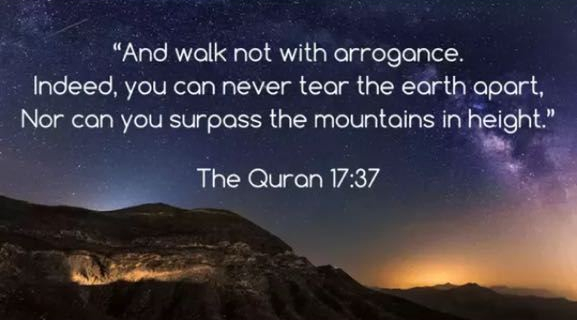
IMG-20170919-WA0002

This verse inspires us:

  • Arrogance and pride even -while walking- is bad in the viewpoint of the Holy Qur’an. ‘ولا تمش فى الارض مَرَحاً’ [do not walk upon the earth exultantly.

  • Paying attention to weak points and considering incapacity is the way of fighting against ego. ‘انّك لن تخرق الارض’ [Indeed, you will never tear the earth [apart].

  • Inner characters influences human being conduct. ‘ولا تمش فى الارض مرحاً’ [do not walk upon the earth exultantly].

  • Considering evil deeds to be negative is a shared point by all Divine religions. ‘كان سیّئه…مكروها’ [its evil is ever… detested].

  • Allah’s orders and prohibitions are for the sake of human being’s upbringing and development. ‘عند ربّك’ [in the sight of your Lord].